A clicking noise during a U-turn is easy to notice because the steering wheel is turned almost as far as it can go. The sound may repeat several times as the car moves, then disappear as soon as the wheels straighten. At first, the vehicle may still steer and drive normally.
Tight turns impose additional angles and pressure on the axles, steering components, suspension joints, and tires. A worn CV joint is a common cause, but tire contact, loose hardware, strut mounts, and drivetrain binding can produce similar sounds. The exact pattern helps identify where the clicking begins.
A Worn Outer CV Joint Is A Common Cause
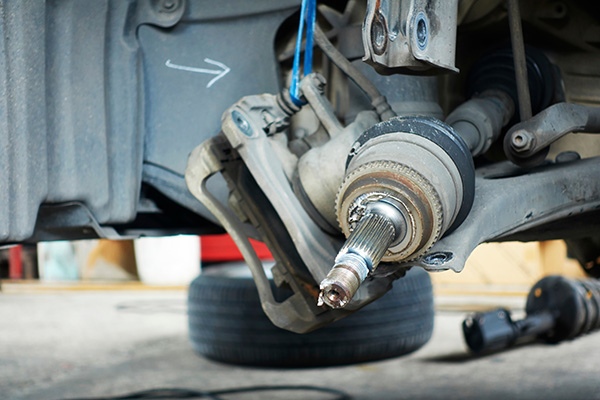
Front-wheel-drive and many all-wheel-drive vehicles use CV axles to transfer power while allowing the wheels to steer and move with the suspension. The outer CV joint works at its sharpest angle during a U-turn. If the joint is worn, it can click repeatedly as the wheel rotates.
The sound is commonly louder when accelerating through the turn. A damaged CV boot is another clue because a torn boot allows grease to escape and dirt to enter the joint. Once the joint runs low on lubrication, internal wear increases and the clicking becomes more frequent.
Why The Noise Changes With Steering Direction
A CV joint problem may sound stronger when turning in one direction. During a tight left turn, the right axle is loaded differently from the left. During a right turn, those forces reverse. Paying attention to which direction makes the sound louder gives the technician useful information.
Sound can travel through the suspension and body, though, so the noisy side is not always obvious from the driver’s seat. Both axles and boots should be inspected before deciding which side needs repair. Replacing the wrong axle will leave the original clicking unchanged.
Tires Or Wheels Could Be Touching Something
A tire can rub against a wheel liner, mud flap, splash shield, suspension part, or loose trim when the steering reaches full lock. The contact may sound like clicking, tapping, scraping, or plastic snapping. Oversized tires, aftermarket wheels, damaged liners, and changes in ride height make contact more likely.
Look for shiny rub marks, loose plastic, missing fasteners, or damage inside the wheel well. A liner can shift after hitting a curb or road debris and only touch during the sharpest turns. Tire contact should be corrected before it cuts into the sidewall or damages nearby wiring.
Strut Mounts Can Click Or Pop During Tight Turns
The upper strut mount allows the strut and spring assembly to rotate as the steering wheel turns. If the mount bearing binds, the spring can twist instead of rotating freely. When that tension releases, you may hear a pop, click, or knock from the top of the wheel area.
A worn mount can also cause rough steering, noise over bumps, or a spring-like sensation through the steering wheel. The mount, spring position, bearing, and strut condition should be checked together. Replacing only one part without examining the entire assembly can leave another source of noise behind.
Steering And Suspension Joints Can Develop Play
Tie rod ends, ball joints, control arm bushings, and sway bar links all move as the wheels turn and the suspension shifts. Wear in one of these parts can create a click or clunk when the vehicle changes direction. The sound may be more noticeable during a U-turn because the steering and suspension are under heavy load.
Loose joints can also cause wandering, uneven tire wear, steering looseness, or noise over bumps. Unlike a CV joint, which commonly produces a steady series of clicks while the wheel rotates, a loose suspension part may make one or two sharper sounds as weight transfers.
All-Wheel-Drive Binding Can Feel Different
Some all-wheel-drive and four-wheel-drive systems can bind during tight turns if the wrong driving mode is selected or if tire sizes are mismatched. The vehicle may hop, shudder, resist turning, or make clicking and clunking sounds as pressure builds through the drivetrain.
All four tires should have the correct size and similar tread depth on systems that are sensitive to rolling circumference. Transfer case, differential, and coupling problems can also create binding. A vehicle that feels like the brakes are dragging during a U-turn needs more than a basic axle check.
Clues That Help Identify The Noise
The sound and driving conditions can point technicians toward the most likely area.
- Repeated clicking that speeds up with the wheels and becomes louder under acceleration commonly points toward an outer CV joint.
- A plastic tapping or scraping sound at full steering lock may come from a loose wheel liner or tire contact.
- A single pop near the top of the wheel area can involve a strut mount, spring, ball joint, or control arm bushing.
- Hopping, resistance, or shuddering during a tight turn can involve drivetrain binding, mismatched tires, or an all-wheel-drive system fault.
- Clicking, combined with loose steering or uneven tire wear, can point to worn steering and suspension joints.
These clues are useful, but an inspection is still needed because several problems can exist at the same time.
Why You Should Not Ignore Repeated Clicking
A worn CV joint usually becomes louder as the internal surfaces continue to wear. If it fails, the axle may stop transferring power to the wheel, leaving the vehicle unable to move. A loose suspension or steering joint can create a more serious safety concern if the wear becomes severe.
Regular maintenance and inspection can catch torn axle boots, loose joints, tire rubbing, and damaged wheel-well parts before the noise gets worse. Checking the cause early also prevents a simple torn boot or loose fastener from turning into a larger repair.
Get Clicking Noise Diagnostics In Marina Del Rey, CA, With Villa Marina Auto Care
If your car clicks, pops, rubs, or shudders during U-turns and other tight steering maneuvers, Villa Marina Auto Care in Marina del Rey, CA, can inspect the CV axles, steering, suspension, tires, wheel liners, and drivetrain.
Contact us to schedule an appointment before the noise develops into a more serious problem.