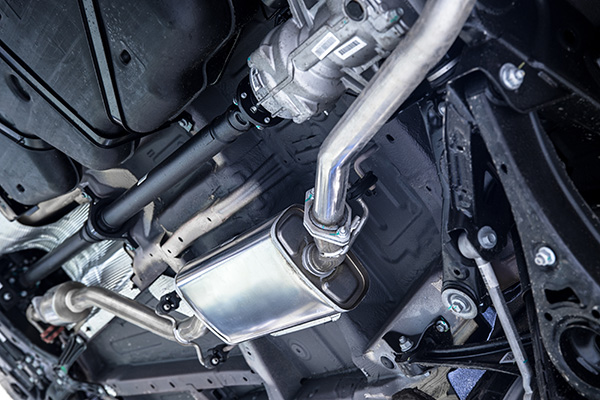
Living near the coast has plenty of advantages, but salty marine air is not especially kind to exposed metal underneath a car. Even when you are nowhere near ocean spray, fine salt particles and moisture can settle on the exhaust, suspension hardware, brackets, fasteners, and other parts beneath the vehicle.
Modern cars have good corrosion protection, so coastal air does not mean the underbody will rust away overnight. The problem develops gradually, especially where protective coatings have been chipped or where moisture collects around seams and hardware. Over several years, that exposure can make ordinary repairs much more difficult.
Salt in the Air Encourages Corrosion
Salt attracts and holds moisture. When salty residue settles on bare steel or damaged protective coatings, it creates conditions that allow corrosion to develop faster.
The effect is most noticeable on unfinished or lightly protected pieces of metal. Exhaust clamps, flange bolts, brackets, suspension fasteners, and small steel shields can show surface rust long before large painted body panels do. At our shop, we see the difference between harmless surface discoloration and corrosion that has started weakening the part or making future disassembly difficult.
Exhaust Components Take Constant Exposure
The exhaust system sits low under the vehicle and deals with road moisture from below while repeatedly heating and cooling from the inside. That makes it a natural place for corrosion to show up.
Pipes and mufflers can develop rust around welded seams, joints, hangers, and areas where moisture stays trapped. Flange hardware can become especially stubborn. A pipe may still be structurally sound while the bolts connecting it to another section are heavily corroded, turning what should be a straightforward exhaust repair into a job that requires cutting or extracting hardware.
Heat Shields Can Start Rattling as Their Mounts Rust
Thin aluminum or steel heat shields protect the floor, fuel system, and nearby components from exhaust heat. Their mounting points are small, and corrosion around those points can allow the shield to loosen.
That is when you may start hearing a metallic buzz or rattle at idle or at a particular engine speed. The shield itself can look fine while the area around a bolt or washer has deteriorated. We check the mounting point before removing a noisy shield because it is there for a reason and should remain in place whenever it can be repaired properly.
Suspension and Steering Hardware Can Become Difficult to Service
Control arms, subframes, tie rods, sway bar brackets, alignment hardware, and suspension bolts all live in the same exposed environment. Many are made from heavy steel and can tolerate some surface corrosion without becoming unsafe.
The trouble often shows up when those parts need adjustment or removal. Corroded alignment bolts can seize inside bushings, nuts can round off, and threaded connections can become difficult to move without heat or cutting. Catching corrosion early does not always prevent eventual part replacement, but it can make future service far less complicated.
Scraped Coatings Leave Bare Metal Exposed
Factory underbody coatings and plated hardware provide the first line of protection against moisture. Once those surfaces are damaged, bare metal has much less protection.
Common causes include:
- Road debris striking the underside
- Scraping a curb or steep driveway
- Improper lifting or jack placement
- Previous collision damage
- Repairs that remove protective coatings
- Missing splash shields or underbody panels
An inspection after underbody damage helps because a small scrape can expose steel even when nothing looks bent or broken.
Short Trips Can Leave Moisture in the Exhaust
Coastal humidity is only part of the moisture an exhaust system deals with. Water is also produced naturally during combustion, and some of it condenses inside the exhaust while the system is cold.
On longer drives, exhaust temperature rises enough to evaporate much of that moisture. Cars used mainly for short trips may not get fully hot before they are shut off again. That leaves more condensation inside mufflers and low sections of pipe, where corrosion can begin from the inside as well as the outside.
Washing the Car Should Include the Underside
Keeping salt residue from building up can help reduce long-term corrosion. The underside is easy to forget because you cannot see it while washing the body.
An occasional underbody rinse is useful after periods of heavy marine exposure, wet weather, or driving close to the shoreline. Don't aim high-pressure water directly at electrical connectors or damaged seals, but gently removing accumulated dirt and salty residue is sensible. Regular maintenance also gives a technician a chance to spot rusted brackets, loose shields, and damaged protective panels before they cause noise or repair issues.
Surface Rust and Structural Corrosion Are Not the Same
Orange or brown discoloration under the car doesn't automatically mean a component needs replacement. Thick suspension parts and exhaust hardware often develop surface rust while remaining completely functional.
We become more concerned when metal flakes heavily, swells around seams, develops holes, or loses significant thickness. Brake and fuel lines, mounting points, and structural areas deserve particular attention if corrosion becomes advanced. The condition of the metal matters much more than the color alone.
Get Exhaust and Underbody Service In Marina del Rey, CA, With Villa Marina Auto Care
If you drive regularly around Marina del Rey, CA, Villa Marina Auto Care can check your exhaust, heat shields, suspension hardware, underbody coatings, and other exposed components for signs of coastal corrosion.
Schedule an underbody check before rusted hardware, loose shields, or damaged exhaust connections turn a routine repair into a much more involved job.